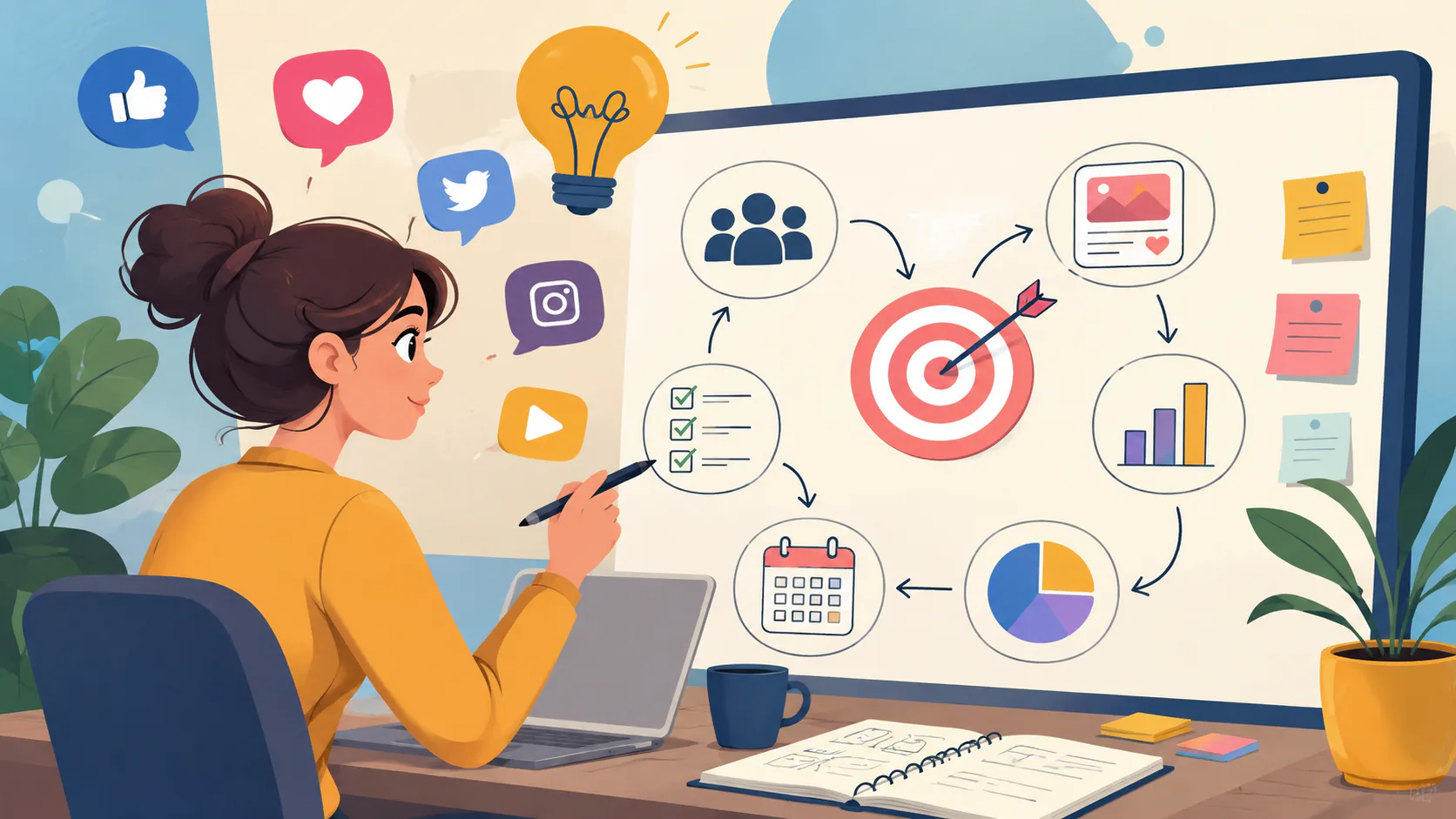
No-code website builders with drag-and-drop functions, visual editors and modern content management systems have removed the need to write code for a huge slice of what websites used to require a developer for. You can launch a clean, responsive, functional site without typing a single line of HTML.
That’s a real shift. And as a team with senior developers on staff, we think it’s a good one. Not because code stopped mattering, but because it pushes the conversation to where it should have been all along.
What are No-Code Website Builders?
No-code website builders are platforms that let you build a functioning website using visual tools, templates and content management systems instead of writing source code by hand. They work by giving the designer a set of pre-built components, layouts and integrations that can be assembled and configured through a graphical interface, with the underlying code generated automatically.
Modern platforms have made this credible for real business websites, not just landing pages and side projects. Examples are Wix, Squarespace, and Shopify, which feature a drag-and-drop editor and pre-built templates. You can also technically build a simple website with WordPress without coding (but with limitations), either by using a pre-built theme and editing the content, or by adding a builder plugin like Elementor. A small team can ship something that looks polished and runs well, without a developer touching the keyboard.
This doesn’t make developers redundant. Custom functionality, complex integrations, performance work, accessibility audits and security still need engineering.
Where the Excitement Actually Comes From
The interesting thing about an industry that needs less code isn’t that anyone can now build a website. Plenty of people could already build something passable. The interesting thing is that the conversation has moved.
When the build stops being the hard part, attention shifts to the end customer. Who they are. What they came for. What would make them stay, come back, or tell someone else?
Everything a good agency does should come back to that one question. How does this site, this page, this paragraph, this button, add value to the person on the other side of the screen? Get that right, and customers don’t just buy once. They stick around. They come back and tell other people.
That’s not easy work. Plenty of websites are designed for the business that built them, not the customer using them. Closing that gap takes more skill than the build ever did. It takes asking better questions, sitting with the answers, and being willing to throw away the obvious solution when the obvious solution isn’t right.
It’s what we do.
What Replaces the Code Conversation
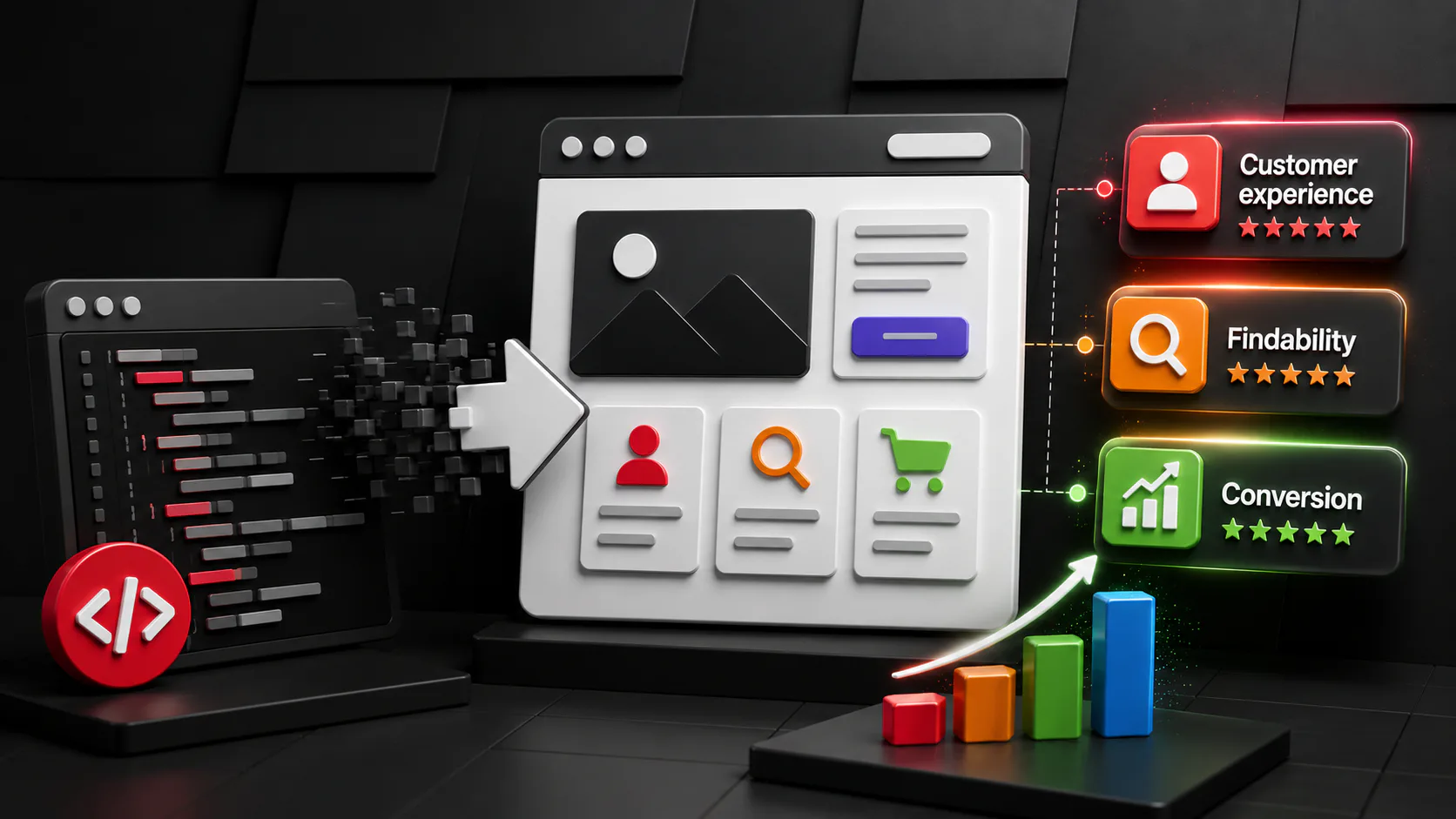
When you’re not spending months arguing about frameworks and build systems, the conversation moves. Three things take their place.
Customer experience. Who lands on this site, and what do they need from the first ten seconds? Most websites still fail at this. They open with what the business wants to say instead of what the visitor came to find out. No platform fixes that. It takes thinking, and as we’ve argued in Why UX Should Be Common Sense, it’s not as complicated as the industry sometimes makes it.
Findability. Search engines, AI engines, social platforms, referral traffic. Your site only matters if the right people can find it. That’s strategy, content and structure working together. None of it is solved by a builder. The builder just makes the build easier.
Conversion. The site has to do something. Generate a lead, take a booking, sell a product, get a phone call. Conversion is shaped by copy, design, page structure, load speed and trust signals. The platform you build on is a small piece of that. The decisions you make about each of those pieces are the rest.
Where the Real Skill Lives Now
If the build is faster and cheaper, the value moves up the stack. Strategy, customer thinking, content design, conversion design, brand work. That’s where outcomes are decided.
What clients are paying a good website agency for in 2026 is the thinking behind the build. What to build, why, and how to make it work for the business it serves.
That changes what you should look for in a partner. Years of platform experience matter less than whether they understand your business. Do they ask the right questions early? Will they push back when the brief doesn’t add up? And does the work go to senior people, or to the most junior person available the moment the project lands?
For a fuller view of how a build comes together, our guide to creating a website brief covers the questions worth answering before anyone opens a builder.
When You Still Need a Developer
No-code has real range. It also has real limits. You still want developers in the room in these cases.
- The site needs to integrate with internal systems, custom APIs or legacy databases
- Performance has to be tight at scale, with thousands of users hitting the site at once
- The CMS has to handle complex content models or multi-site publishing
- Compliance, accessibility or security requirements demand a custom build
- The business needs custom logic that doesn’t fit any off-the-shelf template
- The site is part of a broader product, not a marketing surface
For a corporate or enterprise site with serious requirements, a hybrid approach often makes sense. Use the right tools for the right layers. Visual builders for the marketing front-end, custom development for the parts that need it. Our website design and development work usually sits somewhere on that spectrum.
What This Means for Your Next Website
If you’re planning a new site or a rebuild, the questions worth asking have shifted.
The questions worth asking have shifted. Less talk about platforms, frameworks and how much code. More talk about what the site needs to do, who it’s for, how it will get found and what success looks like in six months. Once those answers are clear, the build decisions get a lot easier and a lot less expensive.
A good partner will spend time on the first set before they touch the second. If they jump straight to platform talk, that’s a signal worth noticing.
Website design without coding is here, and the tools are getting better every quarter. That’s good news. It means the question stops being “can we build this” and starts being “should we build this, for whom, and how do we know it worked?”
Talk to us about your website.