The Background
The Cooperative Research Centre for Water Sensitive Cities (CRCWSC) is an innovative research organisation that unites global thought leaders for cross-disciplinary research. Their primary role is to foster collaboration, assisting cities worldwide in addressing critical water challenges.
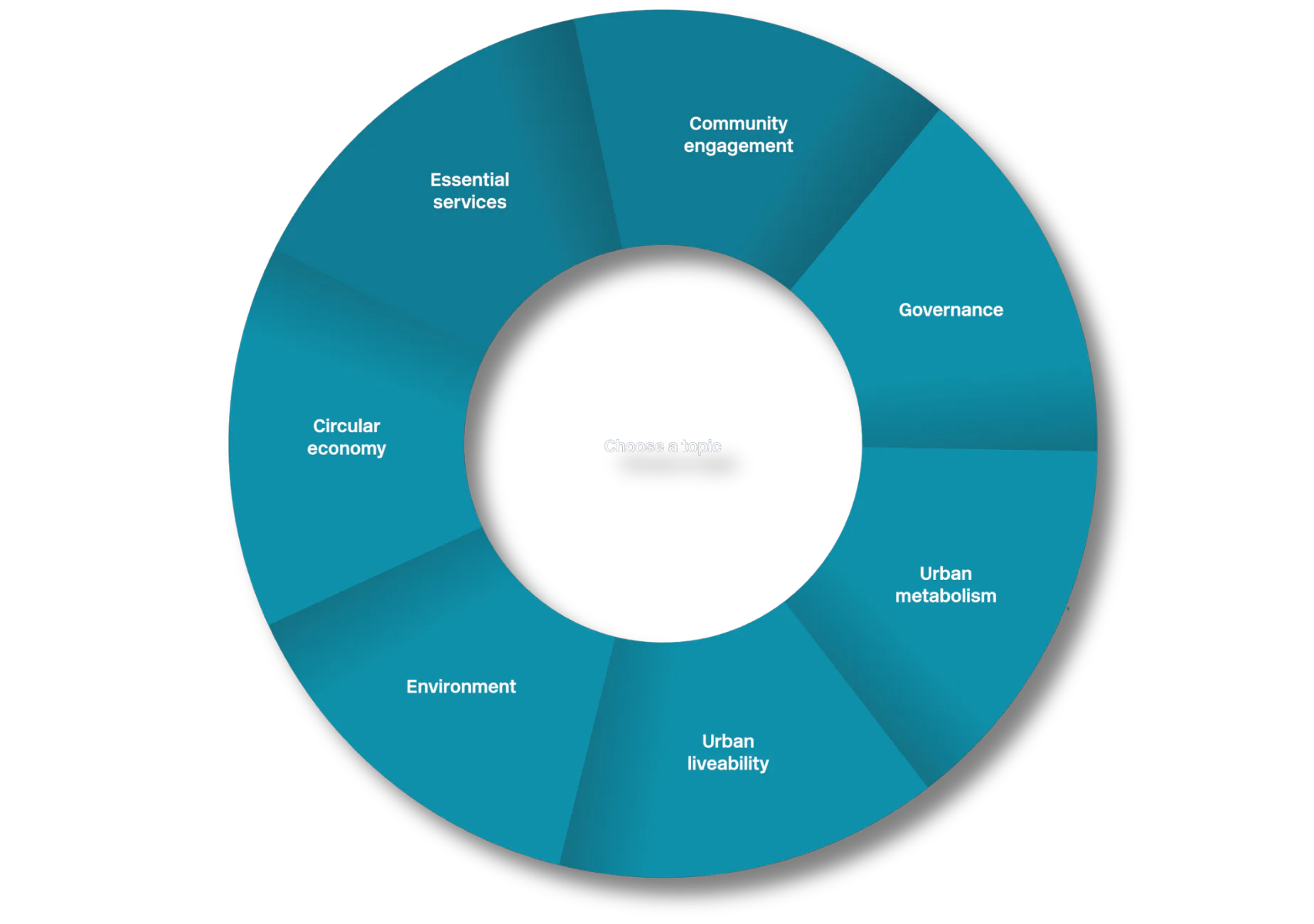
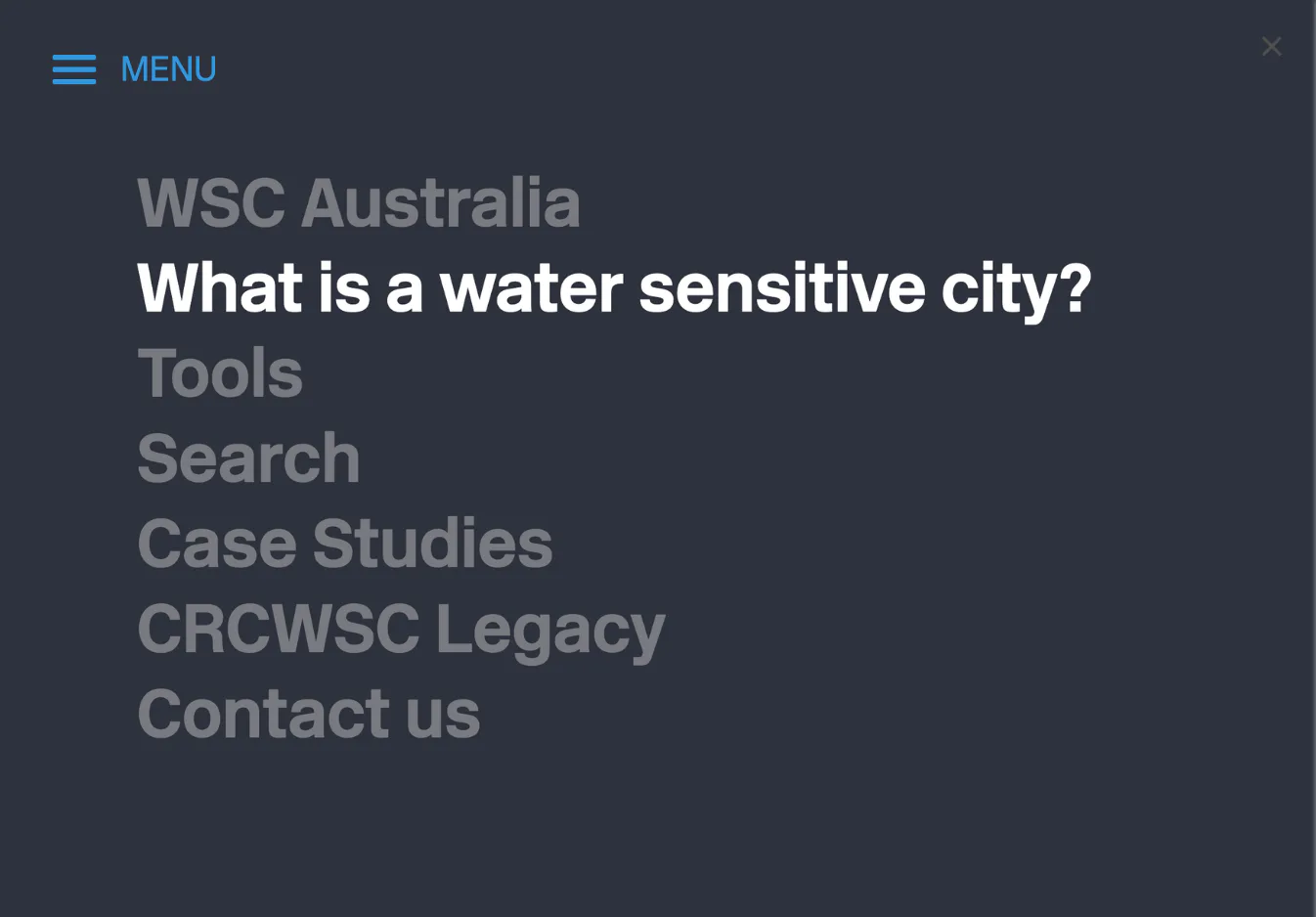
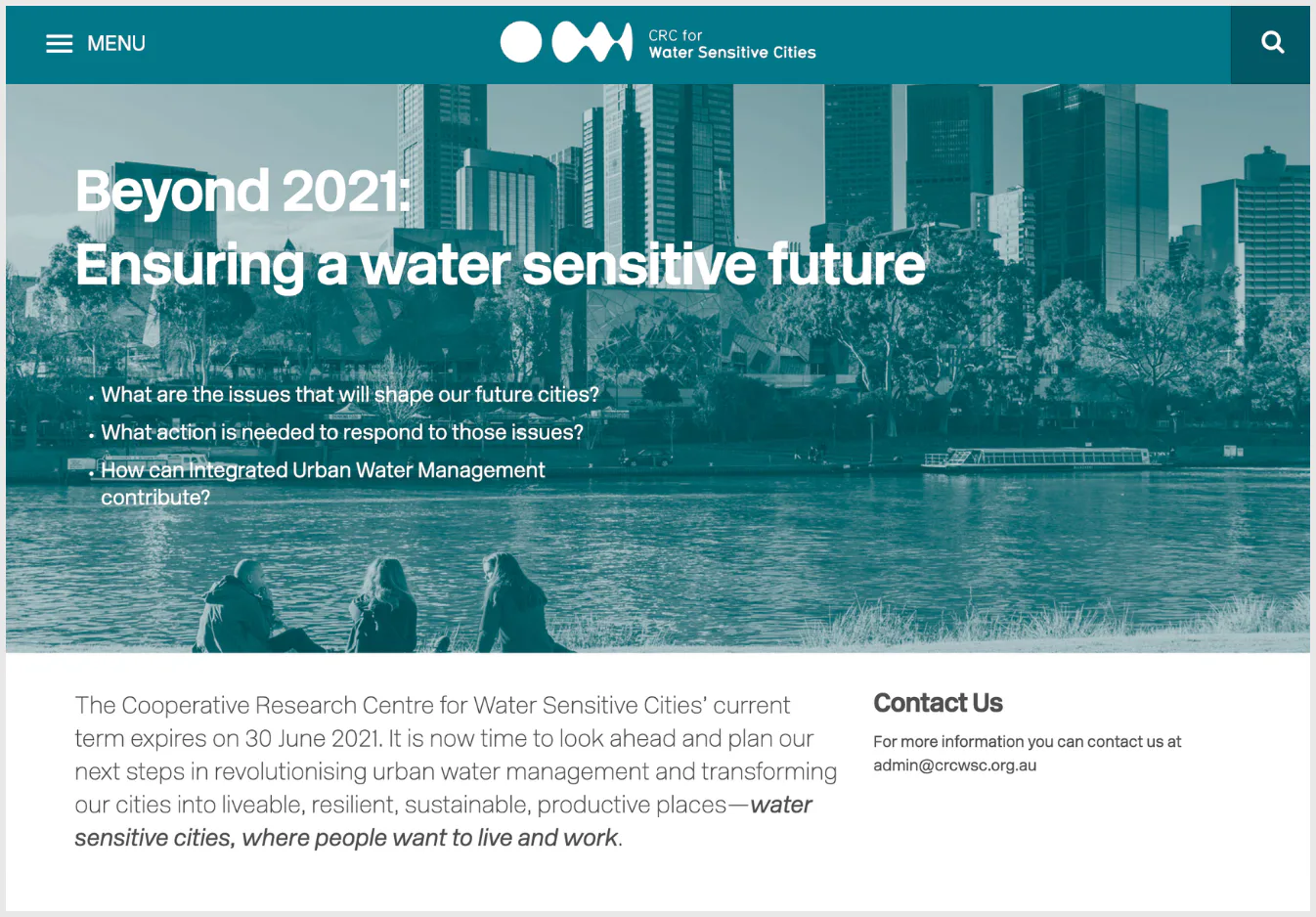
CRCWSC approached us with a brief to redevelop their website and enhance its capabilities to better support their diverse range of stakeholders. However, we quickly realised this was a broader digital transformation project – to build a more progressive brand with thought-leader authority at a global level.
The Challenge
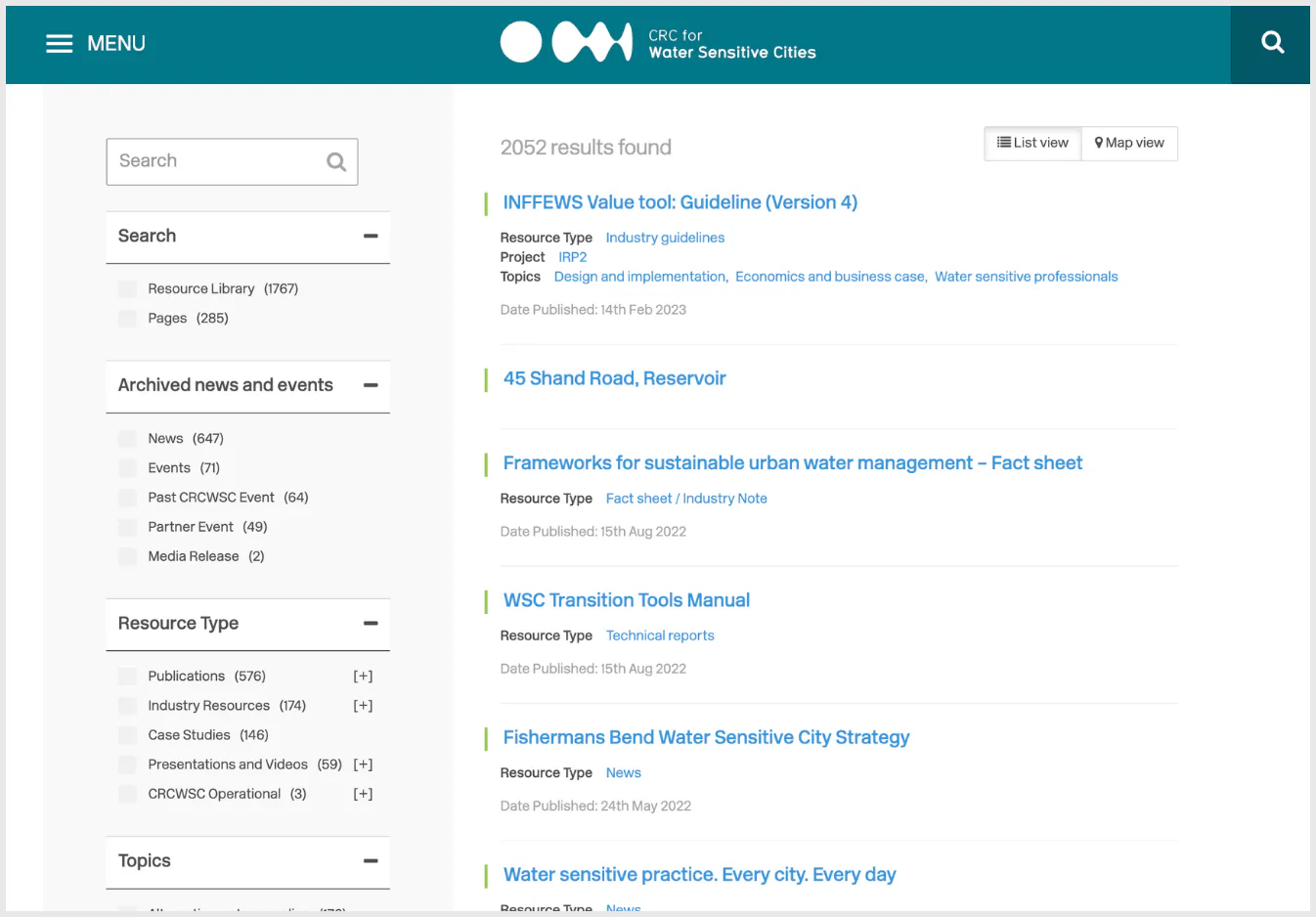
The existing website presented serious usability issues. The stakeholders struggled to search and navigate the vast library of academic content. Beyond functionality, the organisation needed a digital presence that could engage multiple audiences and reflect its global leadership in water-sensitive urban design.
The major challenge was to build a unified platform that could serve as a website, intranet, and extranet–all while managing complex content, permissions, and user journeys. They needed a solution that could:
- Support complex content discovery. Thousands of research outputs had to be findable
- Handle granular permissions. Some resources were public, others restricted to partners or high-level contributors, requiring a robust access control system.
Our Approach
Our initial phase involved collaborating closely with the client to define a clear, overarching objective for the entire project. This objective was to not only engage, inform, and empower diverse users and audiences but also to foster a strong community among CRCWSC participants and accelerate the practical application of their research findings.
We reframed the project around four strategic pillars:
- Find your voice – Shift communication from internal to external
- Push out – Establish global thought leadership
- Be useful – Deliver dynamic, relevant, and accessible content
- Build raving fans – Cultivate a strong, engaged community
To achieve our goal, we:
- Conducted stakeholder surveys and experience design workshops
- Audited the existing site and competitor platforms
- Created detailed user personas and content matrices, which were matched against the content on the website
- Developed a comprehensive strategy document covering all aspects, including the vision, concept and recommendations, plus architecture and wireframes.
- Designed a custom WordPress application with advanced taxonomy and user access levels
- Integrated CRM functionality and built custom plugins for notifications, subscriptions, and events
- Undertook interface design and honed the user experience.
The Outcome
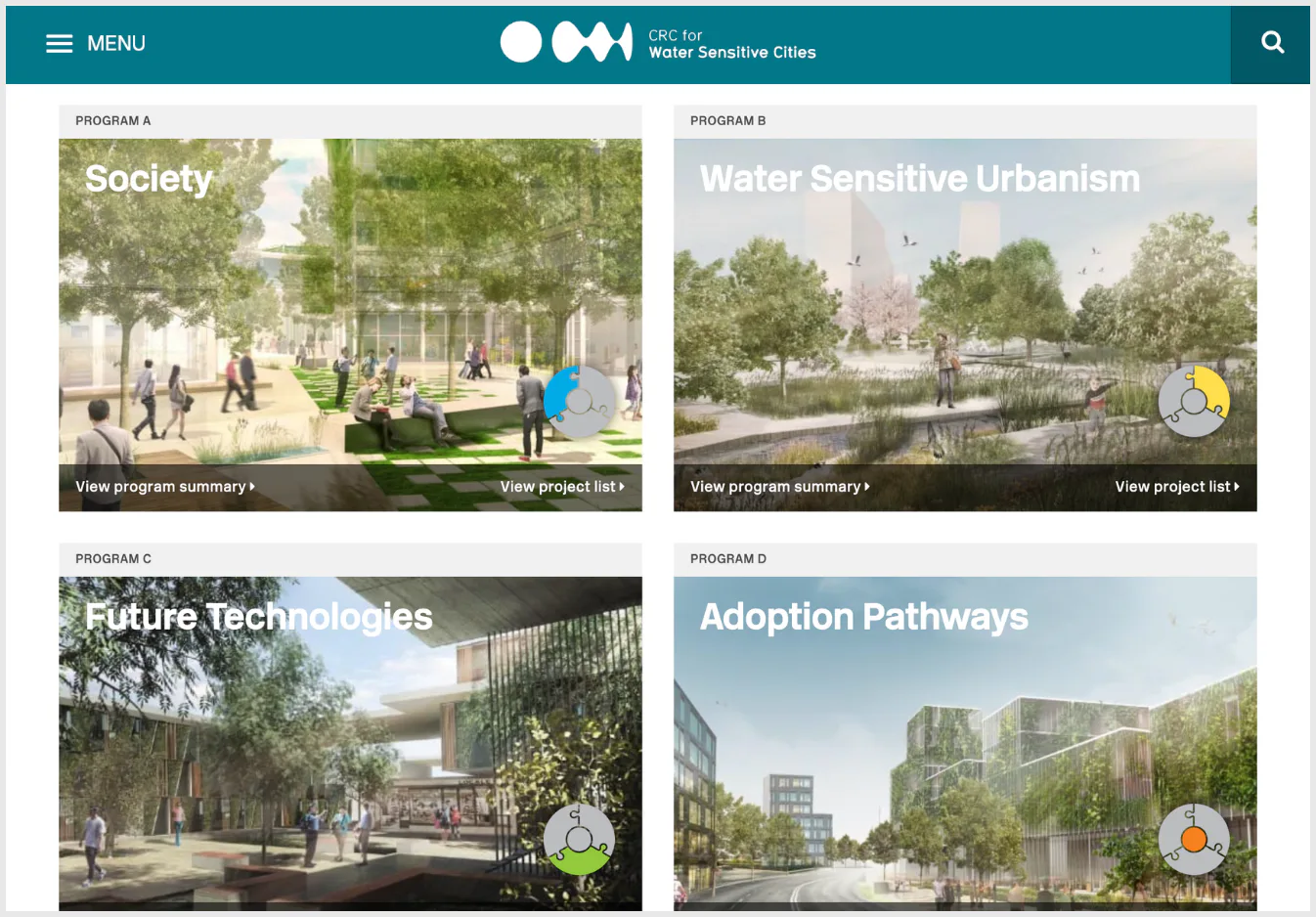
The final platform transformed CRCWSC’s digital repository into a dynamic, user-driven application. Built on a custom WordPress framework, it now supports thousands of academic resources, featuring advanced taxonomy, granular permissions, and tailored user experiences.
- Smarter content discovery: A powerful multifaceted search tool and structured categorisation dramatically improved the time to find relevant resources.
- Geographic mapping of research: Created a tool to allow clients to plot their research and outcome documents based on geographic location; Google Maps provided an alternative way to visualise data, and users can see the work going on in their local area.
- Automated contributor management: Deep CRM integration synchronises author profiles, user accounts, and notifications.
- Personalised dashboards: Each user receives a customised feed of updates, resources, and events based on their interests and level of involvement.
- Access control: Permission-based content delivery ensures that the right users see the appropriate information, whether it is public, partner-only, or contributor-specific.
- Subscription service: This feature enables members to track projects and areas of interest.
- Custom version tracking tool: This enabled the client to notify interested parties via email when a content item was updated.
Why It Worked
We treated this project as a comprehensive digital transformation project, not just a simple website redevelopment. From the outset, we engaged deeply with the stakeholders through surveys and design workshops. This open communication enabled us to identify and address genuine usability issues.
We prioritised building a platform that genuinely served its users. Our focus was not only on functionality and aesthetics but also on ensuring that the end product was intuitive and user-friendly. We aimed to create an experience that resonated with the users’ needs and expectations, placing their requirements at the forefront of our design and development process.