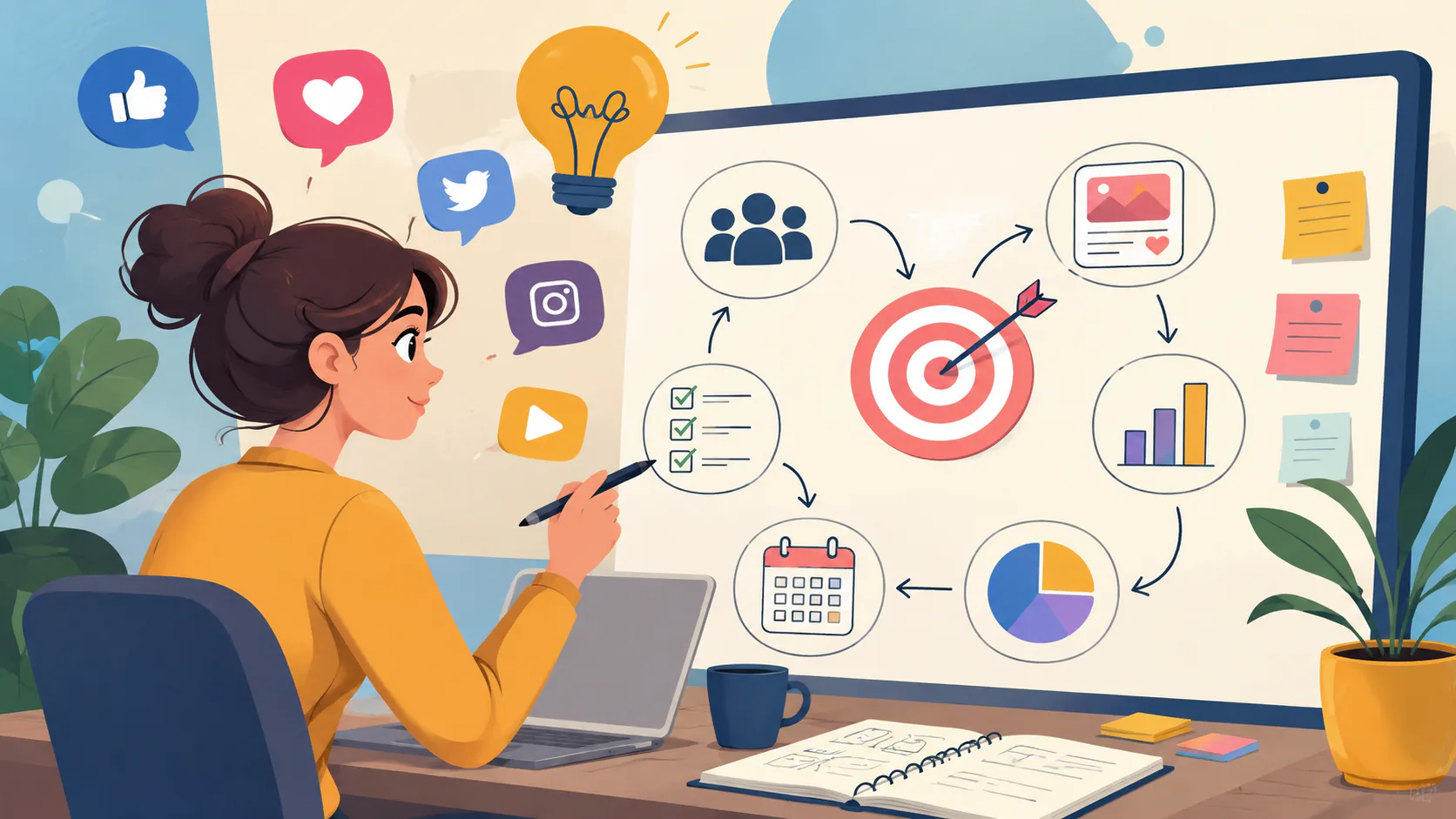
Running email marketing well takes strategy, a clean list, segmentation, sharp writing, automation, Spam Act compliance, and a clear view of where it fits in your business.
Email still earns more revenue per dollar than almost any other digital channel. According to Litmus’s 2025 State of Email Report, marketers are reporting returns between 10:1 and 36:1 on their email programs, and the top-performing 8% of programs hit 45:1 or higher. Email earns its spot in the budget.
What Email Marketing Is
Email marketing is the practice of sending commercial messages to a list of subscribers who have agreed to hear from you. It works by combining a clean, consented list with targeted content delivered through a sending platform, then measuring what people open, click and do next.
That definition matters because it rules out a few things people still get wrong. Buying a list is not email marketing, it’s spam. Scraping addresses from a conference brochure is not email marketing, it’s also spam. Sending the same message to your entire database every Friday is technically email marketing, but it’s the version that doesn’t work.
The version that works is permission-based, segmented, and tied to a measurable goal.
Why Email Still Outperforms
Open the average marketing report and you’ll see email at or near the top of the ROI charts. There are a few reasons it keeps holding that position.
You own the channel. Social platforms decide who sees your posts. Search algorithms decide who finds your pages. Email goes directly to people who’ve raised their hand and asked to hear from you, and no third party gets to throttle that connection. When a social platform changes its algorithm overnight, every brand on it loses reach. When you send an email, the only thing standing between you and your subscriber is your subject line.
The returns are well documented. Litmus’s 2025 research found that companies dedicating 25 to 50 per cent of their marketing team to email operations are the ones hitting the 36:1 to 50:1 ROI range. There’s a clear correlation between investment in email and what it pays back.
And email measures cleanly. Open rates, click-through rates, conversions, revenue per send, list growth. The data is direct and the loop between sending and learning is short. You ship a campaign on Tuesday morning, by Wednesday you know what worked.
Why You Need a Strategy, Not Just a Newsletter
The biggest mistake we see is treating email as a broadcast channel. A newsletter goes out, numbers get checked, the next newsletter goes out, numbers get checked again. Nothing changes. Nothing improves. The list slowly stops opening.
A proper email strategy starts with the question every digital channel needs to answer. What is this doing for the business?
Email is good at four things. Generating leads. Nurturing leads into customers. Retaining customers. Increasing the value of customers you already have. Most businesses need it to do at least two of those. Some need all four. The mix shapes everything else, from how often you send to what each email is asking the reader to do. Email is rarely the whole digital marketing picture, but it’s almost always one of the strongest pieces of it.
If your strategy can’t be written in two sentences, it isn’t a strategy yet. “We send email so we can drive bookings from existing customers and re-engage subscribers who haven’t bought in 90 days” is a strategy. “We send a monthly newsletter” is a habit.
A real strategy also defines what success looks like. Open rate alone is not a goal. Revenue, qualified leads, bookings, or specific actions tied to the business. Those are goals. Open and click rates are diagnostic measures along the way.
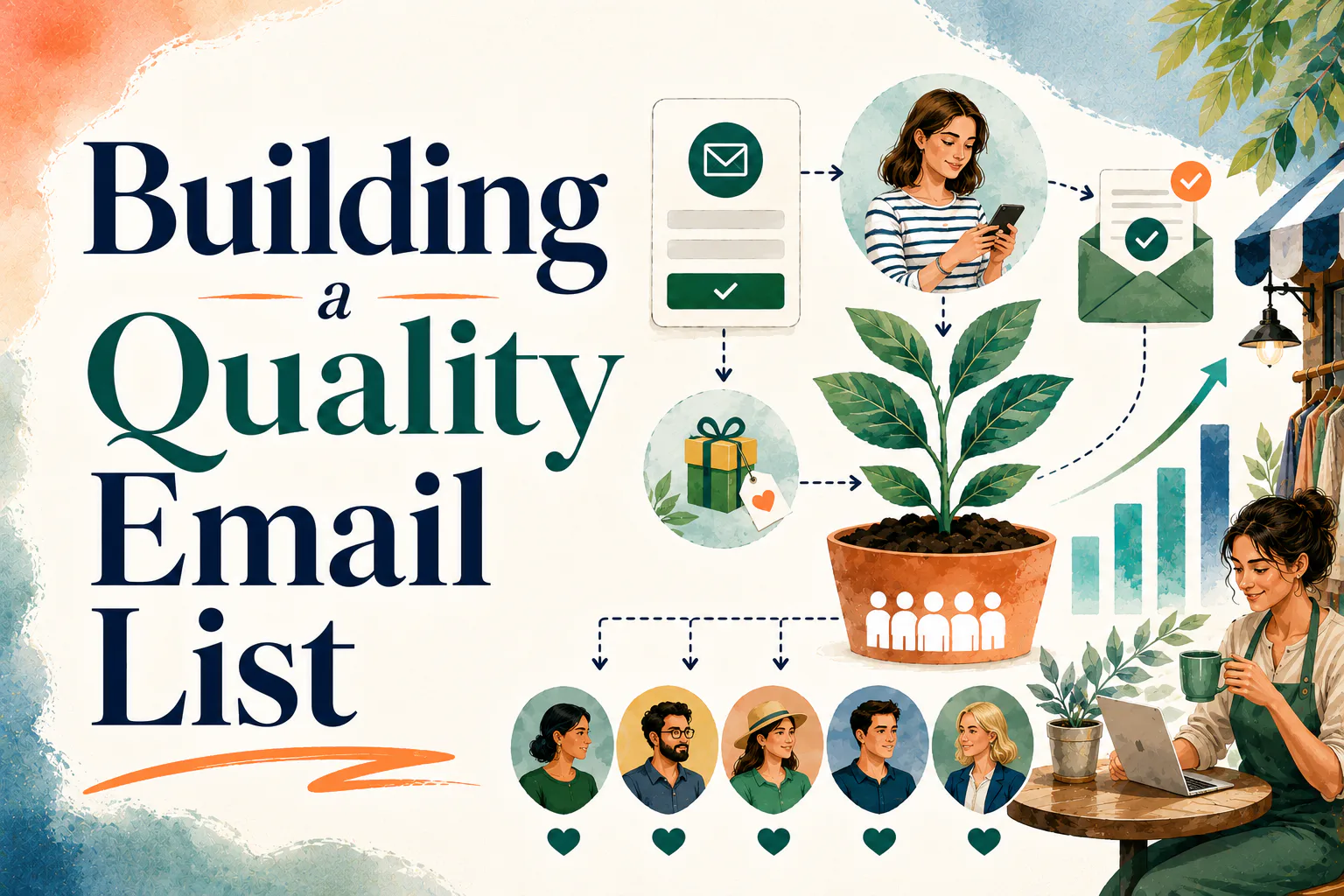
Building a Quality Email List
Everything else in email marketing depends on the quality of your list. Get this part right and decent content will perform. Get it wrong and brilliant content won’t save you.
Don’t buy lists. It’s worth saying first because it still happens. Purchased lists contain disengaged contacts, traps that flag your sending domain, and often people who didn’t consent to receive your emails. In Australia, sending to a purchased list is a fast route to a Spam Act breach.
Grow organically. The most reliable methods are still the most boring. Clear sign-up forms on your website. A lead magnet that gives the subscriber something genuinely useful, like a guide, a checklist, a tool, or a discount. Sign-up opportunities at events and in-store where they’re relevant. Pointing your social followers to a dedicated landing page where they can subscribe.
Make the value clear. A sign-up form that says “Subscribe to our newsletter” gets fewer sign-ups than one that says “Get our monthly playbook on [thing the reader cares about]”. People are happy to give you an email address. They want to know what they’re trading it for.
Use double opt-in where it suits you. It adds friction at sign-up, but it strips out fake addresses and confirms the subscriber actively wants to be on your list. For businesses where list quality matters more than list size, which is most businesses, it’s worth the friction.
Segmenting Your Audience
Segmentation is the single biggest lever most businesses haven’t pulled. HubSpot research shows that 78% of marketers consider subscriber segmentation their most effective email strategy, and segmented campaigns achieve substantially higher open and click rates than unsegmented sends.
A few common segments earn their keep.
- Engagement level. Who’s opening, who’s not, and who’s gone quiet. The way you talk to each group should be different.
- Purchase history. First-time buyers, repeat customers, lapsed customers. The message that converts each one is different.
- Lifecycle stage. A subscriber who joined yesterday gets a different sequence from one who’s been with you three years.
- Interest or behaviour. What pages they’ve visited, what they’ve downloaded, what categories they engage with.
- Demographics. Where it actually changes the offer, not as filler.
You don’t need ten segments to start. You need two or three that meaningfully change the message. Start there, see what moves, then add more.
Writing Emails That Get Opened, Read and Clicked
The mechanics of a good email haven’t changed much. What’s changed is how crowded the inbox is and how short people’s patience for filler has become.
Subject lines. Keep it specific, benefit-led, and short enough to fully display on mobile. Personalise subject lines when it’s relevant. “John, your March report” works. “John, are you ready for life-changing tips?” doesn’t.
One message per email. Cramming three things into one email confuses the reader and leads to inaction. Pick the one thing you want them to take away or do.
Lead with the point. Skip the generic “We hope this email finds you well” and lead with what matters to the reader. If you wouldn’t keep reading past your own first sentence, neither will they.
Short paragraphs, real voice. Walls of text get scanned, not read. So do emails written in corporate autopilot. The emails that perform sound like a human wrote them to another human.
One clear call to action. Multiple CTAs split attention. Pick one. Make it specific (“Book your consultation” beats “Learn more”). Put it above the fold and again at the bottom if the email is long.
Mobile first. Most of your subscribers will open the email on a phone. If it doesn’t read well on a small screen, it doesn’t read well.
Automation: Where Email Stops Being a Job
Automation is what turns email from a weekly task into an asset that earns money in its sleep. The principle is simple. Build a sequence once, set it to trigger based on a subscriber action, and let it run.
A handful of automations that almost every business benefits from.
- Welcome series. Triggered when someone subscribes. Sets expectations, delivers the lead magnet, introduces the brand, and often includes a first offer.
- Abandoned cart or abandoned form. Triggered when someone starts but doesn’t finish. For e-commerce, this is one of the highest-revenue automations a business can run.
- Post-purchase. Triggered after a transaction. Confirms the order, sets up the customer experience, asks for a review, and primes the next purchase.
- Re-engagement. Triggered when a subscriber goes quiet for a defined period. Either wins them back or removes them from your list.
- Milestone or anniversary. Triggered on subscriber birthdays, account anniversaries, or other meaningful dates.
The trap with automation is set-and-forget. Sequences need reviewing every quarter at a minimum. Audiences shift, products change, and an automation that worked brilliantly in 2024 may be quietly tanking your sender reputation now.
List Hygiene: The Part Most Businesses Skip
A clean list is the unglamorous part of email marketing that separates programs that perform from programs that slowly die. Three things matter here.
Remove inactive subscribers. If someone hasn’t opened in six months despite re-engagement attempts, they’re not coming back. Keeping them on the list drags down your open rates, damages your sender reputation, and makes deliverability worse for everyone you do want to reach.
Watch your sender reputation. Email providers like Gmail and Outlook decide whether your emails hit the inbox or the spam folder based on signals. Bounce rates, spam complaints, engagement levels, and how recipients interact with your messages over time. A list full of disengaged contacts sends bad signals. Cleaning the list sends good ones.
Respect unsubscribes immediately. Beyond being legally required in Australia, fighting unsubscribes by burying the link or making people log in to opt out is one of the fastest ways to draw a spam complaint. Make it one click, honour it the moment it happens.
Australian Spam Act Compliance
If you’re sending an email to Australian recipients, you’re operating under the Spam Act 2003. ACMA enforces it and has been visibly aggressive about doing so.
The Spam Act has three pillars, and you need all three to comply.
Consent. You must have the recipient’s express or inferred consent before sending. Express consent is the safest. It’s a clear, unambiguous opt-in. Inferred consent only applies where there’s an existing commercial relationship directly related to the content of the message.
Identification. Every commercial electronic message must clearly identify the sender and include accurate contact details.
Unsubscribe. Every message must include a functional, low-cost unsubscribe option that works for at least 30 days from the date the message was sent. The unsubscribe must be honoured promptly.
A point worth being clear on. Compliance isn’t a tick-box exercise once a year. It’s a question of how your forms collect consent, how your platform records it, how your team treats unsubscribes, and how often someone actually audits it. Get the systems right, and compliance follows. Skip the systems, and a single oversight can land you in front of the regulator.
How Email Fits Across Different Industries
Email works across the board, but the shape it takes changes by industry. A few common patterns.
E-commerce and retail. Abandoned cart recovery, product recommendations triggered by browsing behaviour, seasonal promotions, back-in-stock alerts, VIP loyalty tiers, and post-purchase follow-up are the standard set. The transaction is online, the data is rich, and automation does most of the heavy work.
Professional services. Client onboarding sequences, appointment reminders, content that demonstrates expertise, case studies and testimonials placed at the right moment in the buying cycle, and re-engagement campaigns for dormant clients. The cycle is longer, the touches matter more, and trust is the product.
Local and bricks-and-mortar businesses. Event invitations, local promotions, customer appreciation messages, referral programs, opening hours updates. Email here often supports the in-person relationship rather than replacing it.
B2B and SaaS. Lead nurturing sequences mapped to funnel stage, webinar invitations and post-event follow-up, product update announcements, usage tips and onboarding guides, renewal reminders, expansion and upsell campaigns. Sales cycles are longer and email is doing more of the consideration-stage heavy lifting.
Education and training. Course announcements and enrolment deadlines, content previews, student onboarding, progress check-ins, alumni engagement. The rhythm follows the academic or program calendar.
You don’t have to do all of these. Pick the two or three that fit your business and execute them properly.
Measuring What Matters
The metrics that show up on every email platform dashboard aren’t all equally useful. A short guide on what to actually pay attention to.
Open rate tells you whether your subject lines and sender name are working. It’s a diagnostic, not an outcome. Mobile email privacy changes have made open rates noisier than they used to be, so use them as a directional measure rather than gospel.
Click-through rate tells you whether the email itself is working. The content, the offer, the CTA. This is closer to what the email is actually for.
Conversion rate tells you whether the landing page and offer are doing their job once the click happens. If your CTR is good but conversions aren’t, the email did its job, and the next step didn’t. That’s a sign to look at your landing pages and sales funnels rather than the email itself.
Revenue per send or revenue per subscriber is the metric that ties email back to the business. Top email programs are increasingly measuring at this level rather than relying on opens and clicks.
List growth rate and unsubscribe rate. Together, these tell you whether your list is healthy. Steady growth and a low unsubscribe rate mean you’re acquiring well and keeping people engaged.
When to Do It In-House and When to Get Help
Email marketing is one of the few channels where in-house can genuinely work well if you have the right people. It’s also one where agencies and specialists earn their fee, because the gap between okay email and great email is large, and most businesses sit in the okay zone.
In-house works when you have someone who treats email as their actual job, has time to test and iterate, understands segmentation and automation, and stays current on deliverability and compliance. If email is the third job of someone whose first two jobs are bigger, it’s going to suffer.
Specialist help is worth it when you need to set up a strategy from scratch, when an existing program has plateaued and you’re not sure why, when you need automations built and integrated with other systems, or when compliance and deliverability need a proper review. A good email marketing partner brings a clear strategy, builds the workflows, integrates with your other marketing services, and reports against revenue rather than opens.
The right answer for most mid-sized businesses is a blend. Specialist help to set up the strategy, automations and reporting, in-house execution on day-to-day sends, and a regular review cycle with the specialist to keep it sharp.
If you’d rather have someone build it with you, that’s what we do.
Talk to us about your email marketing.